✦ About the Book
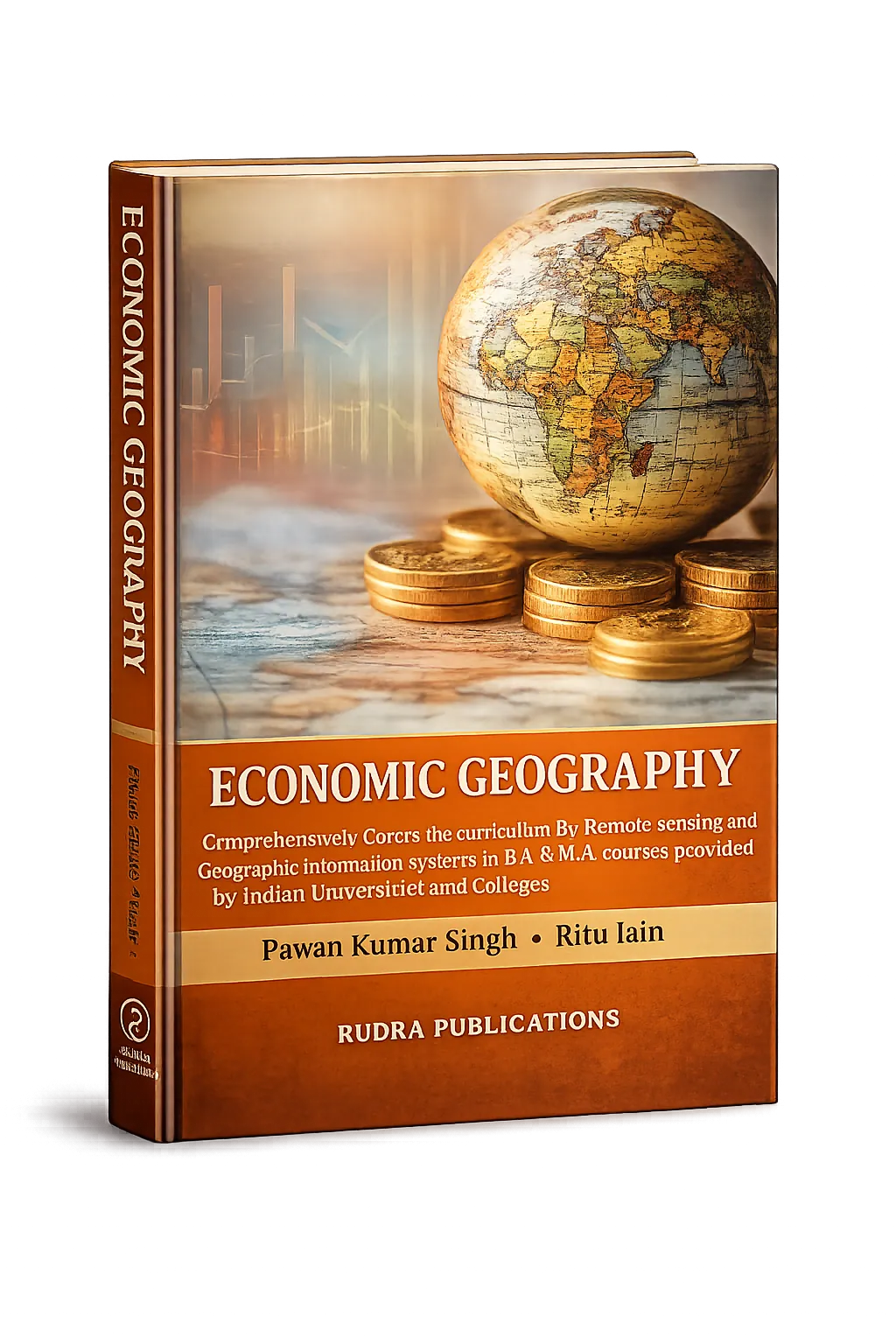
Economic Geography is an academic text authored by Prof. Pawan Kumar Singh and Dr. Ritu Jain, designed to provide a comprehensive understanding of economic activities and their spatial distribution across the world.
The book explores how natural resources, industries, agriculture, trade, and economic systems are geographically organized and how they influence regional development.
It is structured according to the curriculum followed by Indian universities for B.A. and M.A. Geography programs, making it a useful academic resource for students and scholars.
✦ Core Areas Covered
The book systematically introduces major themes of economic geography, including:
- Concepts and Scope of Economic Geography
- Natural Resources and Economic Development
- Agriculture and Agricultural Regions
- Industrial Location and Development
- Transportation and Trade Networks
- Globalization and Economic Systems
- Regional Economic Development
- Modern Trends in Economic Geography
These topics help students understand the relationship between geography and economic development.
✦ Academic Significance
This book is particularly beneficial for:
- B.A. Geography Students
- M.A. Geography Students
- Environmental and Development Studies Learners
- Competitive Examination Aspirants
- Academic Researchers in Economic Geography
The content helps students understand spatial economic patterns and global development processes.
Publication Information
- Title: Economic Geography
- Authors: Prof. Pawan Kumar Singh & Dr. Ritu Jain
- Institution: National P.G. College, Lucknow, U.P., India
- Edition: First Edition (2025)
- ISBN: 978-93-94923-13-3
- Publisher: Rudra Publications, Ghaziabad (U.P.)
✦ Why This Book Matters
With the growing importance of satellite technology, spatial data analysis, and GIS-based decision-making, this book equips students with essential knowledge required for modern geographic research and planning.
It serves as a practical and theoretical guide for understanding geospatial tools used in environmental management, urban development, and sustainable planning.